
BinaryCent Review for Kenyan Traders
BinaryCent is a fixed-time trading platform with a minimum deposit of 250 US dollars and a minimum trade of ten cents. Kenyan traders should weigh that entry cost against the warnings on record before deciding whether to open an account.
Figures checked 13.10.2026What BinaryCent Is and How It Works
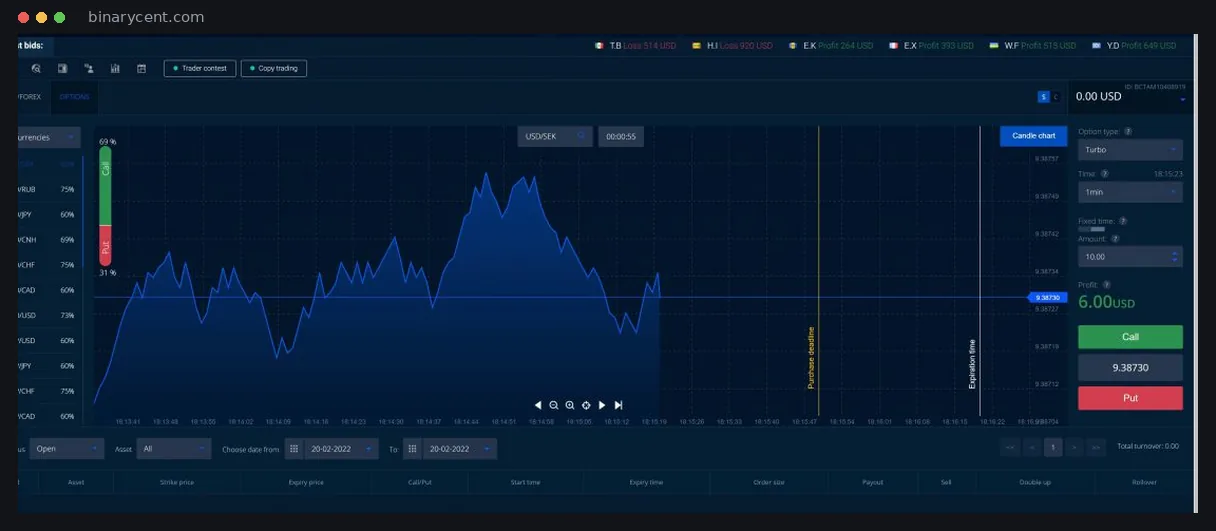
BinaryCent is a fixed-time trading platform. A trader chooses an asset, a direction, and a time frame, and the trade settles at the end of that period. The platform lists Android, iOS, and web access, with its own BinaryCent platform as the trading interface.
The maximum payout BinaryCent advertises is 92 percent. That is the ceiling, not a standard result, and individual trades can settle below it. The minimum trade size is ten US cents, which is lower than most brokers in this comparison, but the entry deposit is far higher at 250 US dollars.
For a Kenyan trader, that combination matters. A low per-trade minimum does little if the upfront deposit is out of reach. Before funding, work out whether the deposit amount is money you can afford to lose entirely, because fixed-time trading carries a real risk of losing the full stake on any given trade.
Deposit and Withdrawal Routes in Kenya
Kenyan traders typically fund a BinaryCent account through M-Pesa, bank transfer, cards, or USDT. M-Pesa is the most common route in the country, though the payment often goes through a payment partner rather than the broker directly. Bank transfers can run through PesaLink or a standard transfer from any local bank.
Cards are accepted subject to your bank's international limit, which some Kenyan banks set low by default. USDT, usually on TRC-20, tends to be the fastest route when a card is declined. Withdrawal routes are not published in the reference material we hold, so do not assume every deposit method works in reverse.
Before sending money, confirm with BinaryCent which route applies to your account and what fees or conversion rates are involved. A deposit that arrives in US dollars from a shilling account will pass through a conversion step, and the rate is set by the payment processor, not by the broker.
Licence and Regulator Status
BinaryCent does not appear in any register we read. We found no licence on record for the platform, which means Kenyan traders have no local regulatory backstop if something goes wrong.
That gap is compounded by the warnings on file. BinaryCent appears on a VFSC notice of fraud, the CFTC red list, the AMF blacklist, and an FMA New Zealand warning. These are not minor administrative notes; they are formal alerts from regulators in multiple jurisdictions.
The Capital Markets Authority licenses online forex brokers and money managers in Kenya, and it does not license fixed-time trading at all. That means even a broker with a clean record elsewhere would not be CMA-licensed for this product. With BinaryCent, the situation is starker: no licence found anywhere, and four separate warnings on record.
How BinaryCent Compares on Cost
BinaryCent's minimum deposit of 250 US dollars is the highest in this comparison by a wide margin. Deriv and Pocket Option both start at 5 US dollars, while Quotex, IQ Option, Olymp Trade, Expert Option, Exnova, and Stockity all sit at 10 US dollars. Bubinga starts at 5 US dollars.
The minimum trade of ten US cents is the lowest on the list. Deriv's minimum is thirty-five cents, and every other broker in the comparison starts at one US dollar. That low per-trade figure can be useful for testing the platform, but it does not reduce the upfront cost of entry.
The maximum payout of 92 percent matches Pocket Option and Exnova, and sits below Quotex at 98 percent, IQ Option at 95 percent, Olymp Trade at 95 percent, Expert Option at 95 percent, Bubinga at 95 percent, and Stockity at 90 percent. Deriv advertises up to 100 percent. These figures are ceilings, not averages.
What Kenyan Traders Should Check Before Signing Up
The first thing to check is the deposit. 250 US dollars is a substantial amount in shillings, and it is the cost of entry before you place a single trade. If that figure is more than you can afford to lose, do not open the account.
Second, check the withdrawal process. The reference material does not publish BinaryCent's withdrawal terms, so ask directly: what is the minimum withdrawal, how long does it take, and which routes are available for Kenyan accounts. Get the answer in writing before you fund.
Third, understand the tax position. The Kenya Revenue Authority taxes income, and profits from trading may be reportable. Keep records of every deposit, trade, and withdrawal so you can account for your activity if asked.
Finally, note that the platform has no licence on record and carries four regulator warnings. If a dispute arises, you will not have a Kenyan regulator to turn to for this product, and the warnings suggest other regulators have already flagged the platform.

